

- Melamine-faced chipboard — over 100 decors: oak, walnut, concrete and stone effects, and plain colours. Resistant to moisture and scratches; a fresh stain is wiped off with a soft cloth. The most affordable option.
- Painted MDF — any colour from the NCS and RAL catalogues, a smooth surface without pores. Resistant to moisture and easy to clean with a soft damp cloth and a neutral cleaner. More expensive than melamine-faced chipboard.
- Veneer — real wood with a unique texture, cared for with special wood products. We consider veneer more reliable than painted MDF, but its choice of colours is smaller. More expensive than painted MDF.
- Milled and framed facades — painted MDF with a pattern or relief on the surface, with the same palette. Relief takes longer to wipe than a smooth facade. More expensive than veneer.
- Fenix — a matt surface that does not retain fingerprints. More than 20 shades from white to black. Cared for in the same way as melamine-faced chipboard. The most expensive option.
- Glass facades in aluminium frames — the glass is clear, tinted or reeded, the frame black, white or gold.
Melamine-faced chipboard facades
The colour and pattern of a melamine-faced chipboard facade are taken from the decor catalogue: this material has no custom tone and no milling. A wood decor is a printed pattern, and up close it differs from real wood.

The decor of melamine-faced chipboard does not fade in the sun.
A dried stain on melamine-faced chipboard is removed with a weak soap solution, a greasy one with a special kitchen furniture cleaner. Solvents and abrasives are not suitable for it.
Melamine-faced chipboard facades: more about the material
Painted MDF
We recommend painted MDF when you need two things at once: a specific tone and a handle milled directly into the edge of the facade, with no surface-mounted hardware.
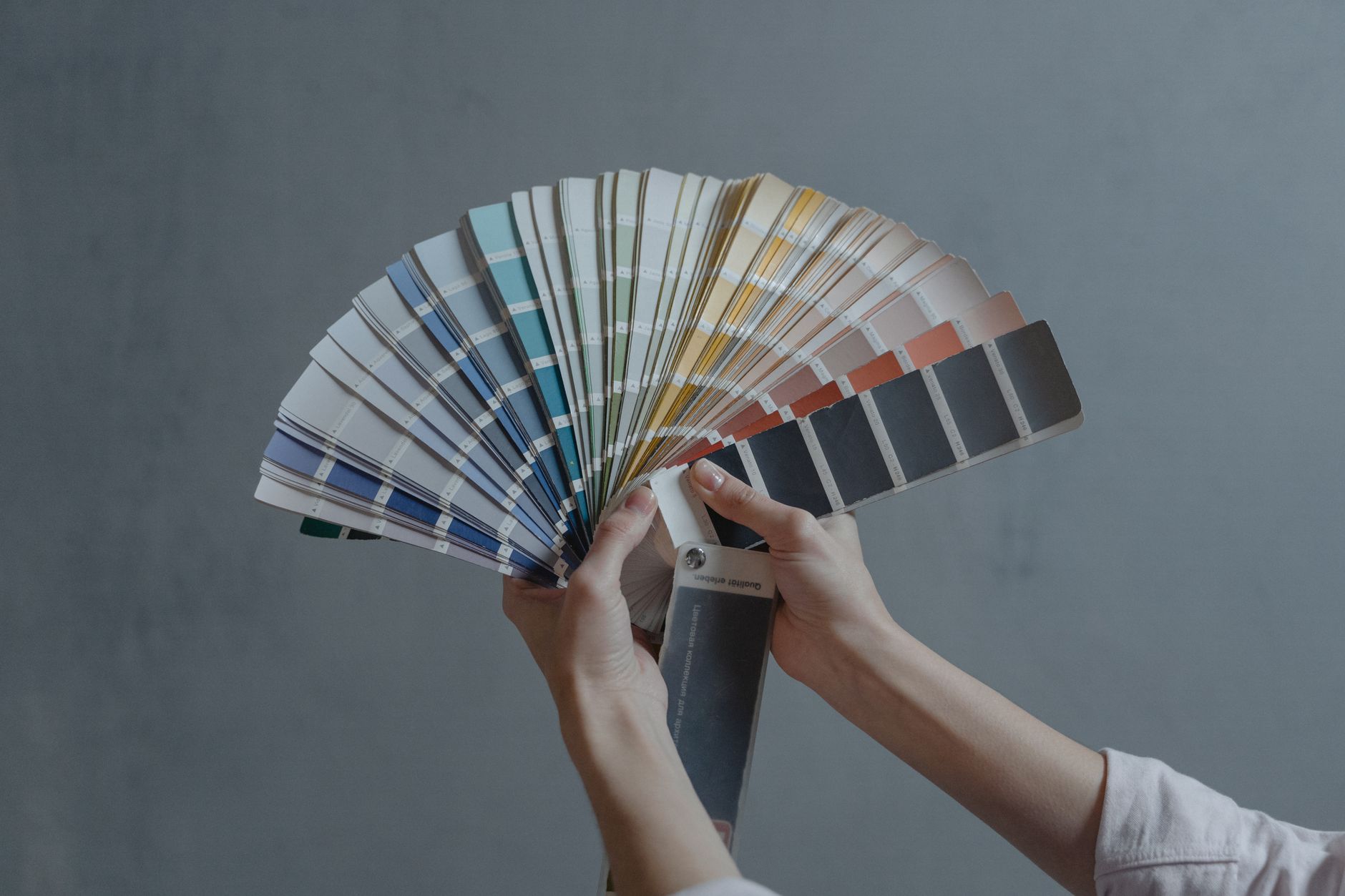
Besides colour, you also choose the level of gloss. We make glossy facades from painted MDF; fingerprints and smears show clearly on gloss.
Matt does not reflect light but absorbs grease. Dark matt tones are more demanding to maintain: fingerprints and minor damage are more noticeable on them.
For light tones we advise semi-matt, the happy medium between matt and gloss.
Natural veneer
Veneer is a thin slice of natural wood on a facade base. The colour of a veneered facade is set by the species — for example oak, ash, walnut, wenge or zebrano — and the shade of the species can be altered by tinting.

It is better to keep veneer out of direct sunlight: natural wood changes shade in the light over time.
Veneer facades: more about the material
Milled and framed facades
A framed facade looks like a frame with a panel in the centre, while a milled one stays flat: the pattern is cut directly into its surface.
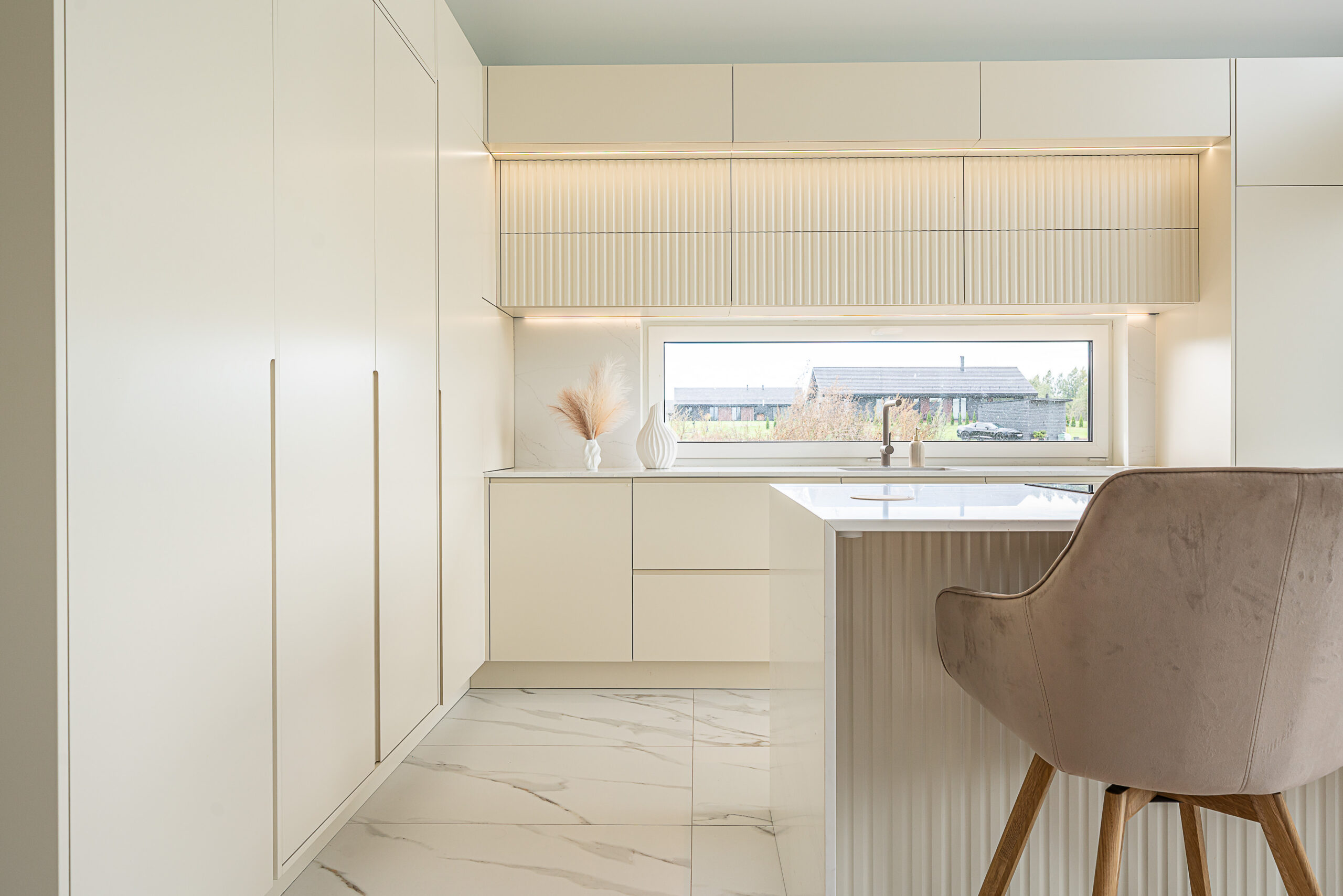
We make both types ourselves from painted MDF and mill abstract patterns, frames or lines into it.
Their care is the same as for smooth painted MDF, except that the milled grooves and the corners of the frame are wiped separately: dust settles in them.
Milled facades: more about the material
Fenix facades
We consider Fenix more reliable than painted MDF, although it comes in fewer colours. It comes down to the surface: according to the manufacturer, the outer layer of Fenix is made of new-generation acrylic resins cured by an electron beam, and its colour is resistant to light.
Minor surface scratches on Fenix can be repaired with heat, following the manufacturer's instructions.
Fenix facades: more about the material
Choosing facades by the kitchen's purpose
Our most affordable facades are melamine-faced chipboard and the most expensive is Fenix. Besides price, it is convenient to choose the material by the kitchen's purpose:
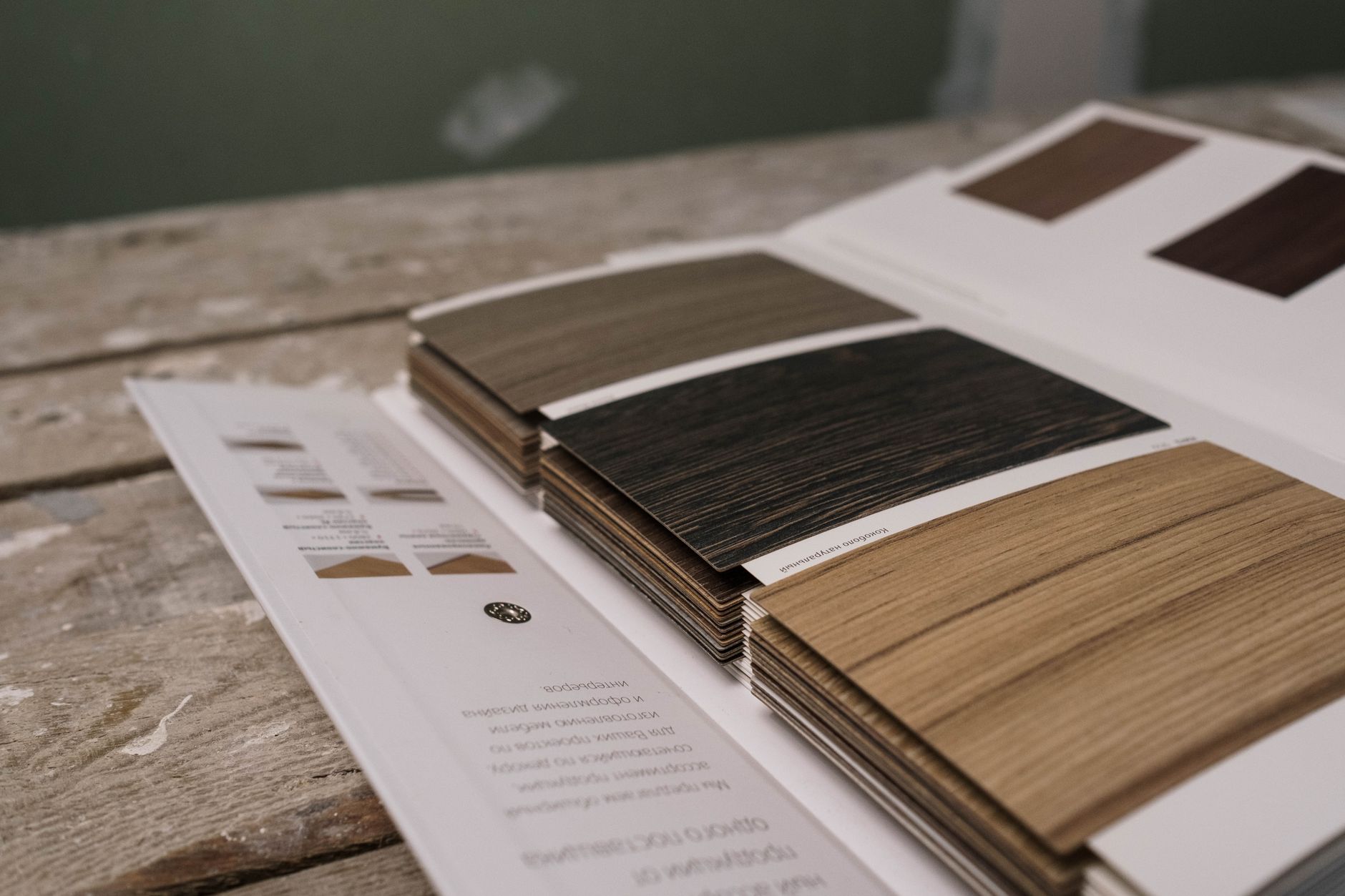
- A ready-made decor from a large catalogue — melamine-faced chipboard.
- Your own colour from NCS or RAL — painted MDF.
- Natural wood — veneer.
- Relief instead of a smooth surface — milled and framed facades.
- A kitchen in heavy daily use — Fenix.
- A glass facade — glass in an aluminium frame.
Kitchen price levels — in the frequently asked questions
Our advice: for a kitchen to look expressive, the expensive material is not needed on every facade. Sometimes a single zone in veneer or with decorative facades is enough, and the rest can be made from a more affordable material — the budget grows only slightly from such a combination.
If needed, we bring the catalogue to the measuring visit — the decor can be checked on the spot.
A quote for a kitchen with the chosen facades
A finished design project is not needed for a quote: the room dimensions or a simple hand sketch are enough.
We will help you choose the facade materials and find a sensible balance between appearance, convenience and budget.
We calculate each project individually, according to your wishes and the features of the room, and you will see the cost of the kitchen in the price quote.